

Starting in 2025, U.S. Customs and Border Protection (CBP) officers will conduct stricter checks on green card holders re-entering the United States. This shift in policy requires permanent residents to prove their ties to America during every border inspection. Failure to do so could result in delays, secondary inspections, or even the risk of losing your green card status.
In this guide, we’ll break down the new rules, explain what CBP officers are looking for, and provide a step-by-step plan to ensure a smooth return to the U.S.
Understanding the New Customs Rules for Green Card Holders
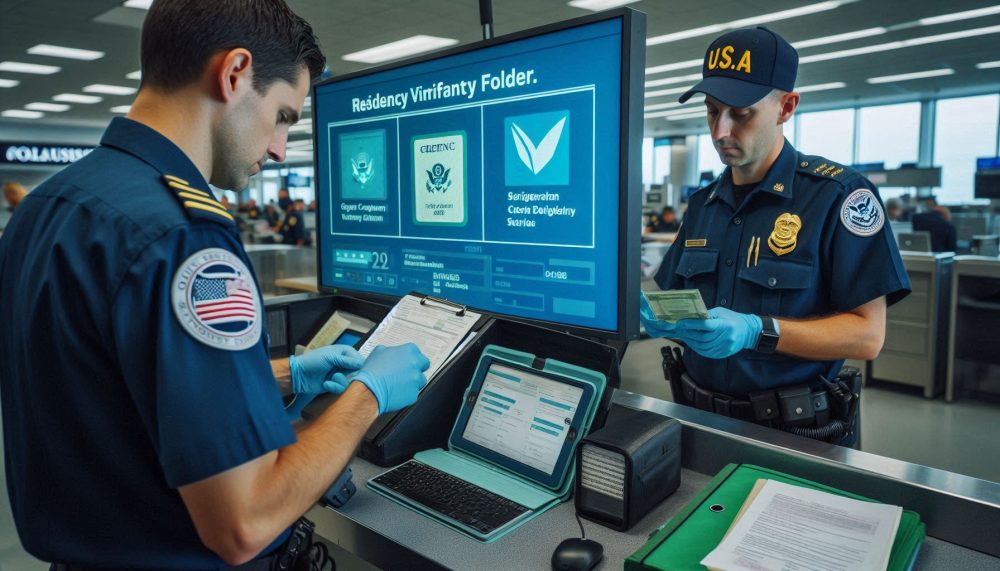
What Has Changed?
- Increased Scrutiny: CBP officers are now trained to assess whether green card holders maintain their primary residence in the U.S.
- Focus on Ties to the U.S.: Officers will examine your job, finances, housing, and travel history to determine if you’ve abandoned your residency.
- No “Automatic Clearance”: Showing your green card is no longer sufficient. You must proactively prove your U.S. ties.
Why the Change?
The U.S. government aims to prevent green cards from being used as long-term visas for extended stays abroad. A green card grants permanent residency , not a license to live elsewhere while using the U.S. as a vacation spot.
Red Flags That Trigger Secondary Inspection
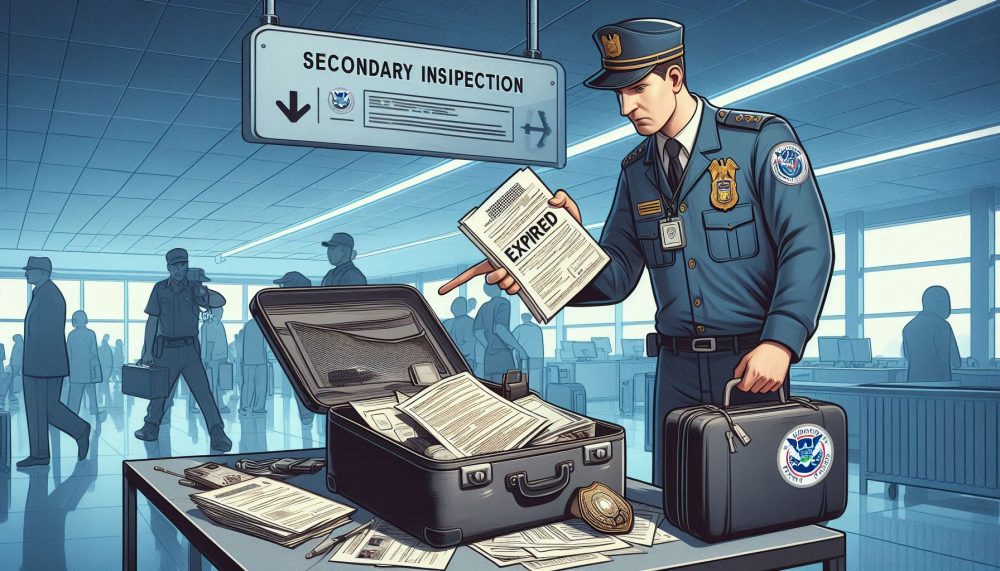
Common Red Flags to Avoid:
- Expired U.S. Driver’s License
- Suggests you’re not actively using U.S. services.
- No Active U.S. Bank Account or Credit Card
- Indicates your financial life may be centered abroad.
- Absences Longer Than 6 Months Without a Re-Entry Permit
- Raises questions about your commitment to U.S. residency.
- Filing Non-Resident Tax Returns
- A huge red flag —green card holders must file as U.S. residents.
Pro Tip: If you’re gone for more than 6 months , apply for a re-entry permit before leaving. However, this is not a guarantee of clearance—it’s just one piece of evidence.
How to Prove Your U.S. Residency: The Re-Entry Folder
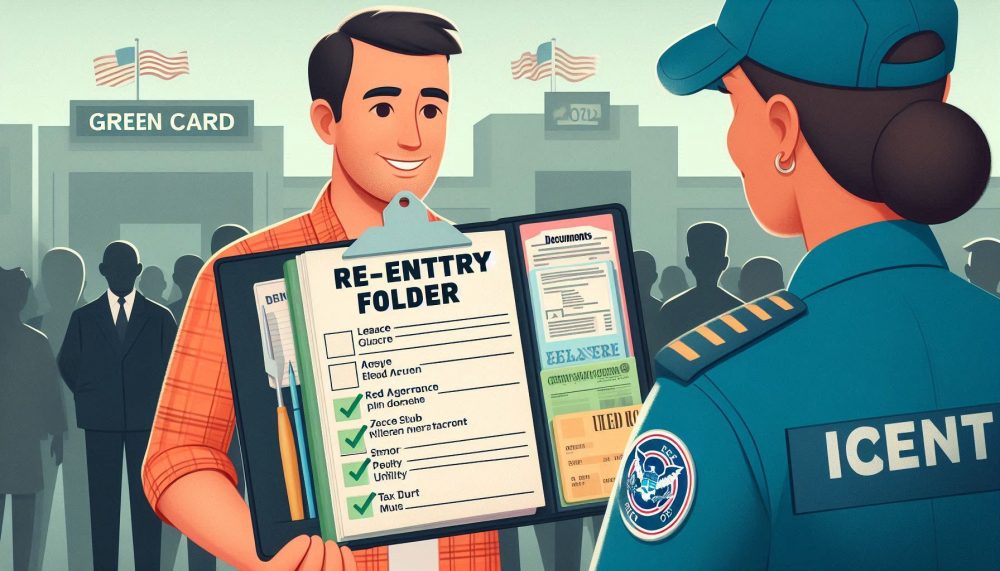
What to Include in Your Re-Entry Folder
Create a physical folder in your carry-on luggage with these critical documents :
1. Proof of Housing in the U.S.
- Lease Agreement or Mortgage Statement
- Recent Utility Bills (gas, electric, water, or cable)
- Homeowner’s Deed (if applicable)
2. Financial Ties to the U.S.
- Active U.S. Bank Statement (show regular transactions)
- Pay Stubs or Employer Letter (proof of employment)
- Self-Employment Invoices or 1099 Forms
3. Community and Lifestyle Proof
- School Registration for Children
- Local Membership Documents (gym, clubs, organizations)
- Car Registration and Insurance (with a U.S. address)
- Recent Tax Return (filed as a U.S. resident)
Pro Tip: Keep all documents organized and up-to-date . CBP officers appreciate clarity and preparedness.
Travel Patterns and the Digital Nomad Dilemma

Why Frequent Travel Raises Suspicion
CBP officers are trained to detect patterns suggesting a green card holder has shifted their center of life abroad. Examples include:
- Taking multiple trips to the same country.
- Spending 3+ months overseas without a re-entry permit.
- Working remotely for a foreign company.
Action Steps:
- Limit absences to under 6 months unless you have a re-entry permit.
- Document the purpose of your trips (e.g., family emergencies, work projects).
- Avoid “digital nomad” lifestyles unless you can prove it’s temporary.
Tax Obligations for Green Card Holders

Why Taxes Matter
- Mandatory Reporting: Green card holders must file U.S. taxes even if they earn income abroad .
- Non-Resident Filing Is a Red Flag: Filing as a “non-resident alien” tells CBP you’re not a U.S. resident.
- IRS-CBP Data Sharing: Your tax history is now shared with CBP.
Pro Tip: Use tax software like TurboTax or consult a CPA to ensure compliance.
Handling a Secondary Inspection Gracefully
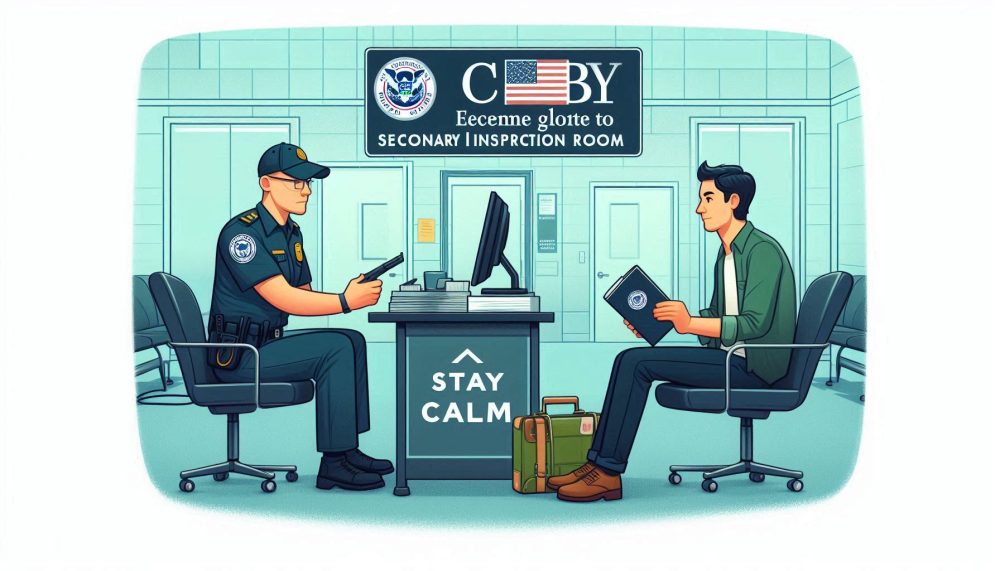
What to Do If Pulled for Further Questions
- Stay Calm and Respectful
- Defensive behavior can escalate the situation.
- Present Your Re-Entry Folder
- Show documents that prove your U.S. ties.
- Be Honest and Consistent
- If you applied for a re-entry permit, explain its purpose clearly.
- Ask for Clarification if Needed
- Never guess—ask the officer to repeat a question if unsure.
Example Response:
“I was in [Country] for [Reason]. I have a re-entry permit and documents proving my job, home, and taxes are in the U.S. Here’s my folder for your review.”
The Role of the Re-Entry Permit
When to Apply for a Re-Entry Permit
- For trips lasting 6–24 months .
- Not required for stays under 6 months.
Key Requirements and Costs:
- Application Fee : The standard filing fee for Form I-131 is $630 , which now includes the $85 biometrics fee (as confirmed by Williams Law).
- Processing Time : 5–7 months (varies by USCIS workload).
- Apply Before Leaving : Submit Form I-131 while in the U.S. to avoid complications.
Important Notes:
- Biometrics Fee Inclusion : The $85 biometrics appointment cost is no longer an additional charge—it’s bundled into the $630 total.
- Renewal for Longer Trips : If your stay exceeds 24 months, apply for a new permit before your current one expires.
Avoiding Common Mistakes
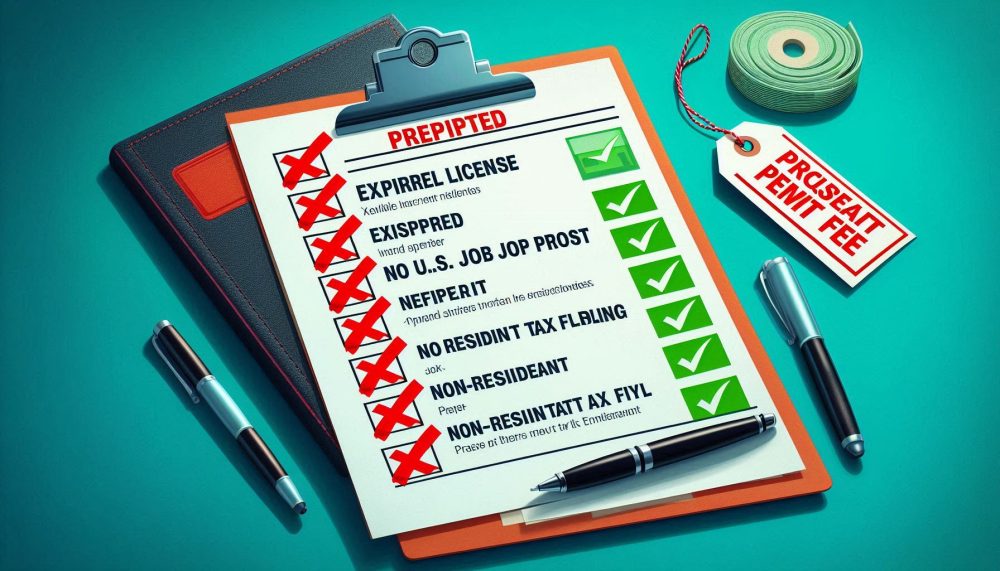
Top 5 Mistakes to Avoid
- Ignoring Tax Deadlines
- Missing the April 15 deadline can trigger CBP alerts.
- Not Updating Your Address
- Ensure your U.S. address is current with the DMV, IRS, and employers.
- Relying Solely on a Re-Entry Permit
- Always bring your re-entry folder.
- Using a Foreign Bank Account Exclusively
- Maintain an active U.S. account.
- Changing Stories About Your Trip
- Consistency is key during inspections.
- Underestimating the Permit Cost
- The total fee is $630 (includes biometrics)
Conclusion: Protect Your Green Card Status
The 2025 customs changes require green card holders to act like permanent residents —not just visitors. By creating a re-entry folder, managing your travel, filing taxes correctly, and knowing how to handle inspections, you can protect your residency and ensure a smooth return to the U.S.
Your Next Steps:
- Gather all required documents for your re-entry folder.
- Review your travel plans and apply for a re-entry permit if needed.
- File your 2024 taxes as a U.S. resident.
- Share this guide with fellow green card holders using #GreenCardTips .
By staying informed and prepared, you’ll navigate the new customs landscape with confidence.

