
Trump’s Travel Ban was a big change in U.S. immigration policy. It started with an executive order in 2017. This move blocked visitors from several countries, sparking debates on presidential power and travel rules.
The ban’s temporary halt of entries was a big topic. Both critics and supporters looked closely at its impact. They wondered if it balanced national safety with helping people in need.
Key Takeaways
- The travel ban started as a Trump executive order targeting specific countries under presidential authority.
- Legal and political disputes surrounded its classification as a controversial immigration policy impacting refugee admissions.
- Updates to the order reflect ongoing tensions between national security goals and global diplomatic relations.
- Courts have shaped its implementation, altering the original travel restrictions over time.
- Readers will learn how this US policy reshaped discussions about presidential power and immigration enforcement.
Understanding Trump’s Travel Ban: Origins and Evolution
President Trump’s executive order 13769 started the controversial travel ban. It was issued in January 2017. This immigration executive order tried to limit travel from several countries. Critics called it the “muslim ban” because it focused on mostly Muslim nations.
This sparked protests and homeland security measures at airports across the country.
The Executive Order 13769: Initial Implementation
The executive order 13769 stopped entry from seven countries, citing national security reasons. Chaos followed as travelers were held back. Courts then blocked parts of the policy.
Legal fights focused on if the immigration restriction broke constitutional rights. The muslim ban controversy was a big part of these debates.
Evolution Through Presidential Proclamations
Later, presidential proclamation 9645 in 2017 replaced the original order. This new presidential proclamation took Iraq off the list and stressed national security measures. By September 2017, the last version matched the Immigration and Nationality Act.
This change aimed to address court worries while keeping temporary restrictions in place.
National Security Justifications
Officials said the immigration policy under trump was needed to boost national security. They pointed out gaps in vetting, saying the homeland security measures stopped threats. But critics argued the policy was based on wrong presidential authority and unfairly targeted certain groups.
“The United States must be protected against foreign threats.” – Excerpt from Executive Order 13769
Over time, the policy evolved from its early, divisive form to a more focused presidential proclamation. It now tries to meet legal standards while aiming for national security.
Countries Affected and Current Immigration Restrictions
The affected countries under Trump’s travel restrictions changed over time. At first, seven muslim-majority countries—Iran, Iraq, Libya, Somalia, Sudan, Syria, and Yemen—had visa restrictions and a 120-day refugee ban. Later, North Korea and Venezuela were added, changing immigration restrictions based on new government regulations.
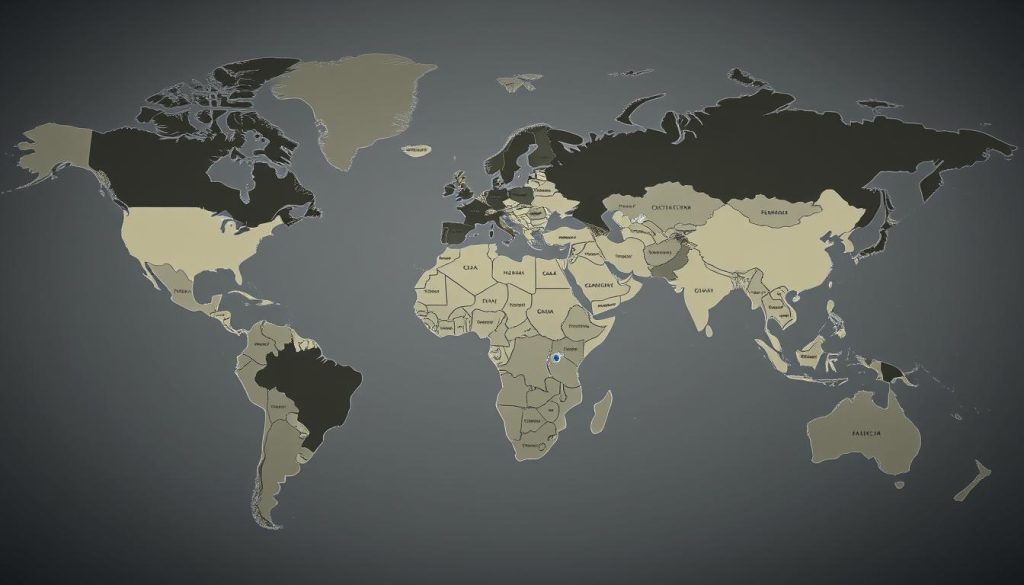
- Phase 1: Seven muslim-majority countries blocked under Executive Order 13769
- Phase 3: Final version removed Iraq, added North Korea and Venezuela, maintaining focus on refugee admissions limits
Visa applicants from these areas faced long screenings and delayed visa issuance. The immigration ban also paused all refugee policy entries for 120 days. This affected over 110,000 foreign nationals. Some visa holders with U.S. ties were exempt, but international travelers got stricter checks at entry points.
Key changes included:
- Reduced refugee admissions caps from 110,000 to 18,000 annually
- Requirement for visa applicants to prove “bona fide” relationships to U.S. entities
- Enhanced data-sharing demands from listed countries as part of international travel regulations
These steps affected visa holders and international travelers trying to enter. It caused confusion at borders. Courts later blocked parts of the immigration ban. But, the main visa restrictions on listed countries stayed until later policy changes.
Impact and Consequences of the Travel Ban
The travel ban has caused big changes in courts and markets worldwide. Here’s how:
Legal Challenges and Supreme Court Rulings
The legal battle over the travel ban went to the Supreme Court in 2018. A 5-4 supreme court decision supported the policy. It weighed national security against constitutional rights.
Important court rulings showed the balance between executive power and religious freedom.
“The policy is justified by the Government’s interest in protecting the country,” wrote Justice Kennedy in the 2018 opinion.
Effects on International Relations
Foreign policy tensions grew as countries like Iran and Turkey spoke out against the travel ban repercussions. Here are some key reactions:
| Country | Reaction |
|---|---|
| Iran | Filed diplomatic complaints |
| EU | Expressed concerns over global implications |
| Turkey | Imposed visa restrictions on US travelers |
Humanitarian Impact
Families were hit hard by the humanitarian impact of delayed or denied visas. Here are some examples:
- Separated refugees waiting to be reunited
- Students stuck in the middle of their semesters
- Medical patients unable to get treatment
Economic Consequences for Tourism and Business
The impact on tourism industry led to big economic consequences. For example:
| Industry | Effect |
|---|---|
| Hotels | 12% revenue drop in major cities |
| Education | Decline in international student enrollments |
Business travelers also faced travel ban repercussions. This disrupted global deals and conferences.
Conclusion: Current Status and Future Outlook
The current travel ban news is a subject of ongoing debate. The Supreme Court upheld parts of the US immigration policy from 2017. Yet, later immigration policy changes adjusted the list of affected countries and exemptions.
The travel ban updates now focus on security criteria. Critics, though, argue that the controversial decision roots of the ban remain. Travelers should always check presidential travel restrictions before planning their trips.
Recent immigration news shows ongoing legal battles over the refugee policy and admission limits. Courts are closely examining how immigration executive orders balance security and civil liberties. Experts point out the travel ban impact on families and businesses, sparking debates on its long-term effects.
The future outlook depends on court decisions and policy changes. New administrations could bring changes to the US immigration policy, affecting which countries face restrictions. Those affected by the travel ban updates should keep an eye on official sources for the latest current status and eligibility requirements.
Understanding these immigration policy changes helps individuals navigate restrictions and engage with evolving debates. As policies evolve, staying informed is key. It ensures awareness of how presidential travel restrictions might affect travel or residency plans.
FAQ
What is Trump’s Travel Ban?
Trump’s Travel Ban is a set of rules that restrict travel and immigration from certain countries. It started in January 2017. The goal was to boost national security and fight terrorism.
Which countries were affected by the travel ban?
Countries like Iran, Libya, Syria, Yemen, Somalia, and North Korea were hit by the ban. The list changed over time with new orders.
What are the main legal challenges regarding the travel ban?
Many have argued the ban unfairly targets Muslims. Courts have weighed in, with the Supreme Court backing a version in 2018. They cited national security.
How has the travel ban impacted tourism?
The ban has cut down on international visitors, mainly from banned countries. This hurt the U.S. tourism and hospitality sectors. It also reduced cultural exchange and tourism income.
Are there any exceptions to the travel ban?
Yes, there are exceptions for some, like permanent residents and certain visa holders. But getting these exceptions can be hard.
What is the current status of the travel ban?
Today, parts of the ban are active, while others have been changed or dropped. Legal battles and policy updates keep changing U.S. immigration rules.
How did the travel ban affect international relations?
The ban strained ties with many Muslim-majority countries. It led to protests and criticism from abroad. It also made the U.S. seem less welcoming to immigrants and travelers.
What are the implications of the travel ban for future immigration policy?
The ban has sparked debates on U.S. immigration, security, and presidential power. Its effects could shape future immigration and refugee policies.

