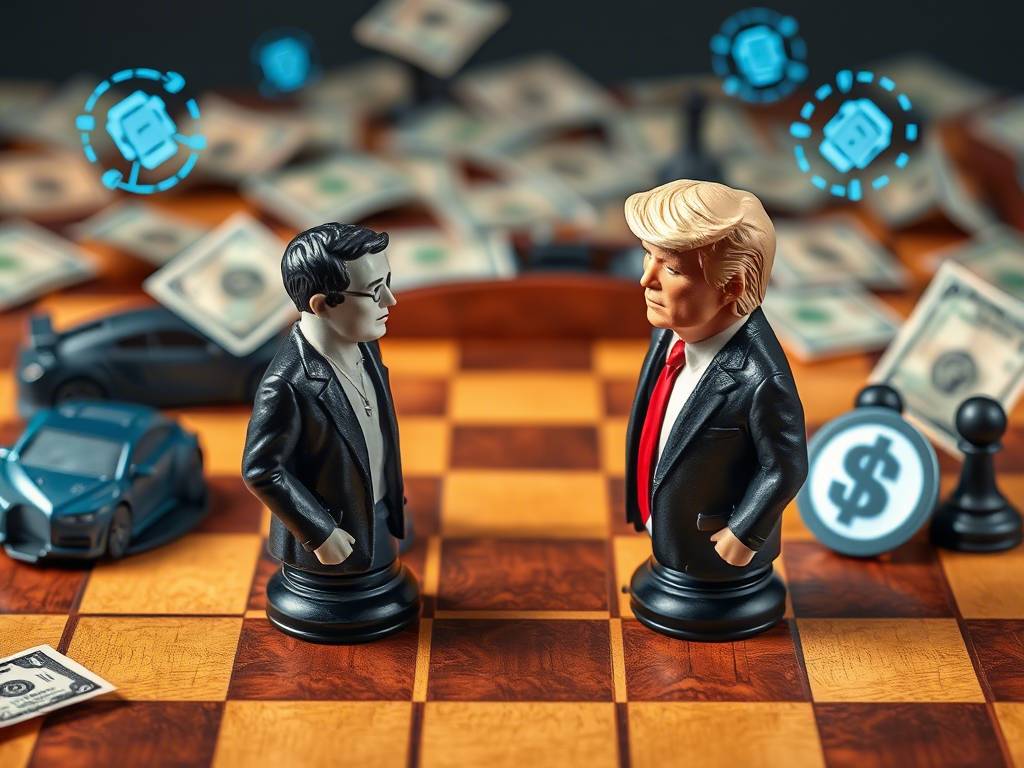
Elon Musk, the tech mogul behind Tesla, SpaceX, and X (formerly Twitter), has reignited his political activism, clashing publicly with former President Donald Trump over a contentious spending bill. This conflict, however, extends far beyond fiscal policy, revealing a broader rift between Musk and the Trump administration over electric vehicle (EV) tax credits, artificial intelligence (AI) deals, and trade policies. Let’s dive into the details of this escalating feud and its implications for American politics and business.
The Spark: Musk’s Scathing Critique of Trump’s “Megabill”
On June 4, 2025, Elon Musk unleashed a torrent of social media posts condemning Trump’s $1.7 trillion spending bill, calling it a “disgusting abomination” that threatens to “bankrupt America.” His criticism was uncharacteristically aggressive, even for a billionaire known for his outspoken nature.

In one post, Musk urged his 200+ million followers to “Call your Senator, Call your Congressman—Bankrupting America is NOT ok! KILL the BILL.” Another read: “No one who actually reads the bill should be able to stomach it.” These messages amplified conservative opposition to the legislation, drawing sharp rebuttals from Republican leaders.
Senate Leader John Thune’s Response
Senate Majority Leader John Thune dismissed Musk’s deficit concerns, stating Republicans understand the Congressional Budget Office (CBO) scoring system and believe the bill will stimulate economic growth. “It’ll create better-paying jobs and generate more government revenue,” Thune argued.
Speaker Mike Johnson’s Pushback
House Speaker Mike Johnson called Musk “flat wrong” about the bill’s fiscal impact. In a tense exchange on X, Johnson insisted there’s “no time for a brand-new bill,” while Musk retorted: “We need a new bill that doesn’t grow the deficit.” Johnson defended the legislation as “extraordinary,” citing record tax cuts and savings.
Behind the Scenes: Musk’s Private Frustrations with Trump’s Agenda
Sources close to both parties reveal Musk’s grievances extend beyond the spending bill. Over the past year, tensions have escalated over several Trump administration policies directly impacting Musk’s businesses and alliances.
1. Electric Vehicle Tax Credit Cuts: A Blow to Tesla
Musk’s fiercest opposition centers on a provision in the spending bill that phases out EV tax credits—a policy Tesla once championed. After the 2024 election, Musk surprisingly called for ending the credit, arguing it had outlived its purpose. However, Tesla reversed course, warning that scrapping the credit would “threaten America’s energy independence and grid reliability.”
2. AI Deals Favoring Rivals: Musk’s OpenAI Resentment
Musk has privately criticized Trump’s administration for striking AI partnerships with OpenAI, a rival to his own xAI startup. Despite Musk’s objections, the deals proceeded without his involvement, deepening his sense of exclusion from key tech policy decisions.
3. Withdrawal of Jared Isaacman’s NASA Nomination
The sudden withdrawal of Musk ally Jared Isaacman’s nomination as NASA administrator further strained relations. Isaacman, a billionaire entrepreneur and SpaceX partner, was seen as a proxy for Musk’s interests in space policy. His removal left Musk “deeply disappointed,” according to insiders.
4. Trade Policy Disputes: Musk vs. Peter Navarro
Musk’s feud with Trump’s trade advisor Peter Navarro remains unresolved. In April 2025, Musk called Navarro a “moron” and “dumber than a sack of bricks” on X after clashing over tariffs affecting Tesla’s supply chain. Navarro later accused Musk of “hypocrisy” for benefiting from U.S. subsidies while criticizing protectionist policies.
Why Musk’s Criticism Matters: Influence Beyond Politics
As CEO of Tesla and SpaceX, Musk wields unparalleled influence over technology, energy, and aerospace sectors. His public criticism of Trump’s policies isn’t just political theater—it’s a strategic move to shape legislation affecting his companies.
The EV Industry’s Future at Stake
Tesla’s dominance in the EV market relies partly on federal incentives. Cutting tax credits could slow adoption rates, benefiting legacy automakers like Ford and GM, which are lobbying aggressively for the provision. Musk’s campaign to preserve the credit highlights his willingness to fight for policies aligning with Tesla’s growth.
AI Regulation: A Winner-Takes-All Battle
The Trump administration’s AI deals with OpenAI risk sidelining xAI in the race for dominance. With AI poised to redefine industries, Musk’s frustration underscores the high stakes of regulatory favoritism.
Trump’s Dilemma: Balancing Musk Against Republican Priorities
Trump’s team faces a tricky balancing act. While Musk’s criticism galvanizes grassroots conservatives, alienating him risks losing a powerful ally. Yet caving to Musk’s demands could fracture GOP unity.
The Deficit Debate: Perception vs. Reality
Musk frames his opposition around fiscal responsibility, but experts argue his true motive is protecting Tesla. The spending bill’s deficit impact remains debated, with the CBO projecting modest growth effects.
Musk’s Political Power: A Double-Edged Sword
Musk’s 200 million followers amplify his voice, but his erratic policy shifts—like flip-flopping on EV credits—undermine credibility. Trump allies privately question whether Musk’s priorities align with broader conservative goals.
What’s Next? Predicting the Fallout
The clash between Musk and Trump reflects a larger struggle within the Republican Party: How to reconcile populist spending with fiscal conservatism. Here’s what to watch for:
- Amendments to the Spending Bill : Will GOP leaders revise the EV tax credit provision to appease Musk?
- Musk’s 2024 Campaign Role : Could this feud push Musk to support a third-party candidate?
- Regulatory Battles : Expect intensified lobbying over AI regulations and trade policies.
Conclusion: A Feud That Could Shape America’s Future
Elon Musk’s war with Trump isn’t just about a spending bill—it’s a battle for control over technology, energy, and economic policy. As both sides dig in, the outcome will reverberate across industries and elections. Whether this rift mends or escalates, one thing is clear: Musk’s influence on American politics is here to stay.