In a sweeping policy change that will impact millions of global travelers, the U.S. Department of State (DOS) has announced a major restriction on where nonimmigrant visa (NIV) applicants can schedule their mandatory in-person interviews.
🇺🇸 U.S. Restricts Visa Interview Locations: A Complete Guide to the 2025 Nonimmigrant Visa Policy Shift
Effective immediately, all NIV applicants — whether applying for the first time, renewing an expiring visa, or changing visa categories — must now schedule their interviews exclusively at U.S. embassies or consulates located in either their country of nationality or their country of legal residence.
This marks the end of a long-standing flexibility that allowed applicants to “forum shop” — choosing interview locations in third countries where wait times were shorter, processing was faster, or logistics were more convenient.
For students, temporary workers, tourists, and business travelers alike, this change represents a significant tightening of U.S. visa accessibility — with ripple effects on global mobility, international education, cross-border employment, and family reunification.
In this comprehensive guide, we’ll break down:
✅ What the new policy means for you
✅ Which visa categories are affected (and which are exempt)
✅ The official list of designated processing posts for restricted countries
✅ Real-world impacts: longer waits, higher costs, logistical nightmares
✅ Expert commentary and analysis
✅ Actionable steps for current and future applicants
✅ Potential exceptions and workarounds
Whether you’re an H-1B worker in India, an F-1 student in Nigeria, a B-2 tourist in Venezuela, or an L-1 executive in Ukraine — this guide is your essential roadmap to navigating the new U.S. visa landscape.
Let’s dive in.
📜 What Exactly Changed? The Core of the New DOS Policy
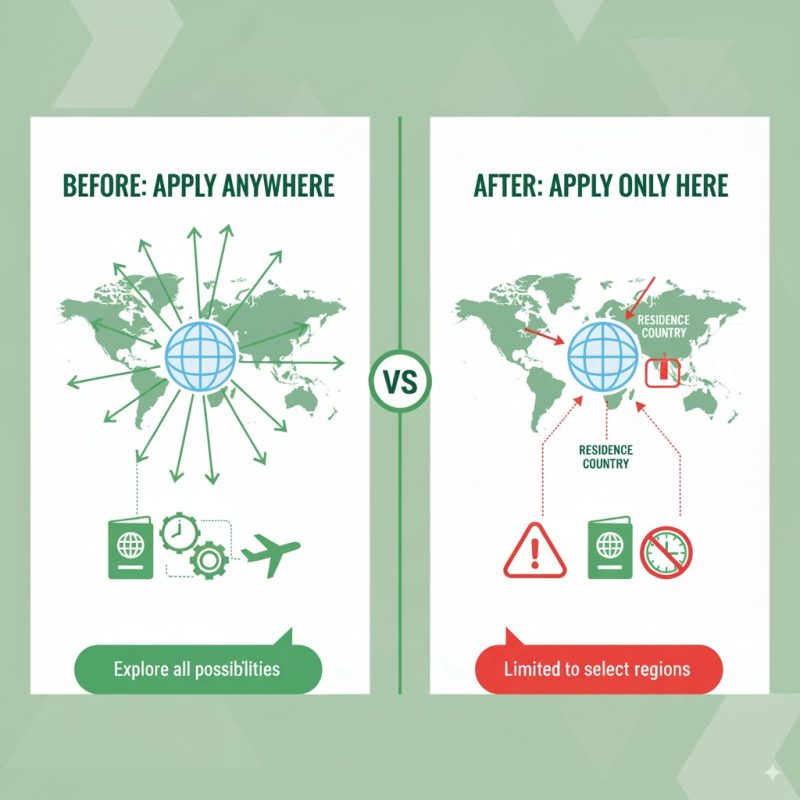
Until this announcement, U.S. consular policy allowed nonimmigrant visa applicants considerable flexibility in choosing where to attend their mandatory visa interviews.
Many applicants — especially those from countries with long appointment backlogs or limited consular services — strategically applied in “third countries” like Mexico, Canada, Thailand, or Poland to secure faster processing.
This flexibility was particularly valuable during and after the COVID-19 pandemic, when many embassies suspended operations or faced massive backlogs. Applicants could — and did — travel to neighboring countries with shorter queues to avoid delays of 6, 9, or even 12 months.
No more.
Under the new policy, that flexibility is gone.
🚫 Applicants can no longer schedule NIV interviews outside their country of nationality or legal residence — unless they fall under very limited exceptions.
The Department of State has made it clear: if you’re applying for a U.S. nonimmigrant visa, you must do so where you’re from — or where you officially live.
This policy shift is not happening in isolation. It follows a similar restriction announced last week for immigrant visas (green card interviews) — and is widely seen as part of a broader effort by the current administration to tighten immigration controls and reduce visa accessibility.
🎯 Who Is Affected? Visa Categories Under the New Rule
The new interview location restriction applies to nearly all nonimmigrant visa categories — including some of the most commonly used visas for work, study, and tourism.
✅ Affected Visa Categories:
- H Visas (H-1B, H-2A, H-2B, H-3) — Temporary workers
- L Visas (L-1A, L-1B) — Intracompany transferees
- F Visas (F-1, F-2, F-3) — Academic students
- M Visas (M-1, M-2, M-3) — Vocational students
- J Visas (J-1, J-2) — Exchange visitors (including au pairs, researchers, professors)
- B Visas (B-1/B-2) — Business visitors and tourists
- O, P, Q, R Visas — Extraordinary ability, athletes, cultural exchange, religious workers
Essentially, if you’re applying for a temporary U.S. visa that requires an in-person consular interview, this policy applies to you — unless you fall under the narrow list of exemptions.
🛡️ Who Is Exempt? Special Visa Categories Not Covered
Not all nonimmigrant visas are subject to this restriction. The DOS explicitly carved out several categories related to diplomatic, official, and international organization travel.
❌ Exempt Visa Categories:
- A Visas — Diplomatic and government officials
- G Visas — Employees of international organizations (e.g., UN, World Bank)
- C-2 and C-3 Visas — Transit visas for UN officials and foreign government officials
- NATO Visas — For personnel under the North Atlantic Treaty Organization
- Visas covered under the UN Headquarters Agreement
These exemptions reflect the U.S. government’s ongoing commitment to facilitating official international diplomacy and multilateral cooperation — even as it restricts general public access.
🌍 Designated Processing Posts: Where to Apply If Your Country Has No U.S. Embassy Services
One of the most critical — and potentially disruptive — aspects of this policy affects applicants from countries where the U.S. does not conduct “routine nonimmigrant visa operations.”
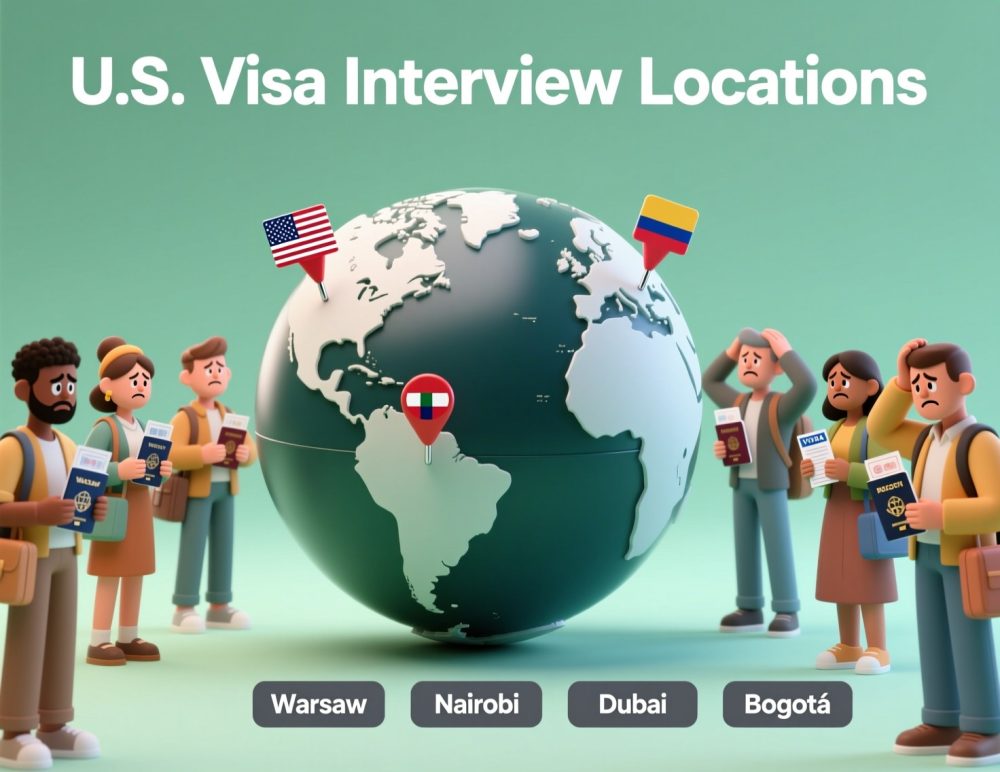
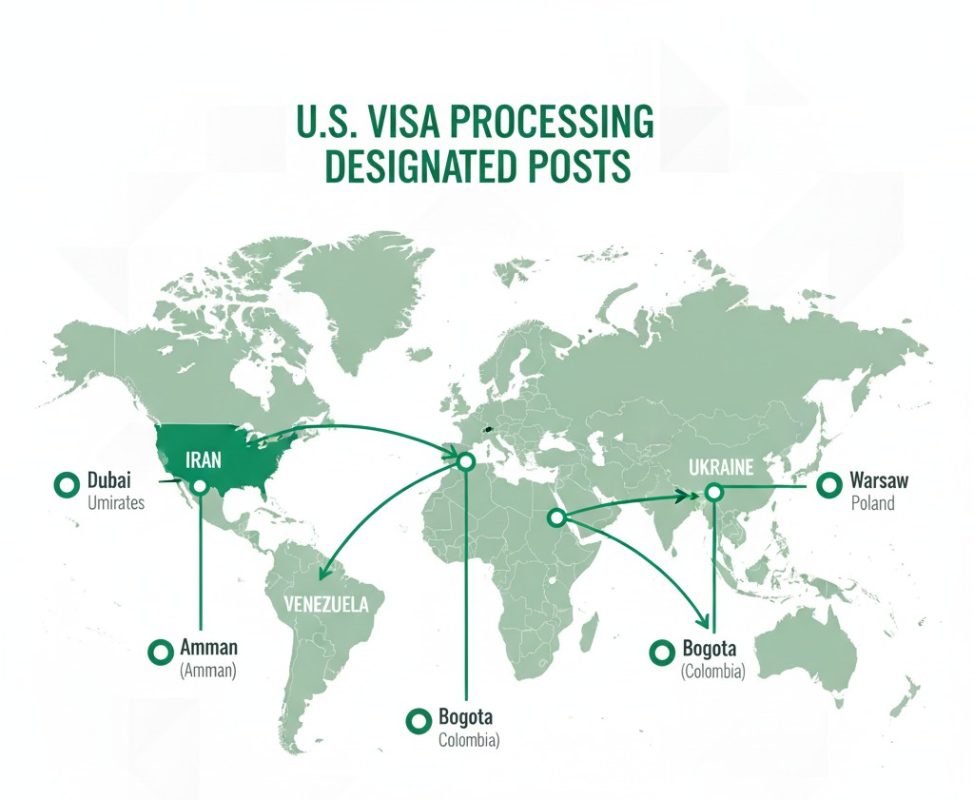
In these cases, applicants must travel to a designated processing post — often in a neighboring or regional country — to complete their interview.
Here’s the official list, straight from the Department of State:
| Afghanistan | Islamabad, Pakistan |
| Belarus | Vilnius (Lithuania), Warsaw (Poland) |
| Chad | Yaoundé, Cameroon |
| Cuba | Georgetown, Guyana |
| Haiti | Nassau, Bahamas |
| Iran | Dubai, United Arab Emirates |
| Libya | Tunis, Tunisia |
| Niger | Ouagadougou, Burkina Faso |
| Russia | Astana (Kazakhstan), Warsaw (Poland) |
| Somalia | Nairobi, Kenya |
| South Sudan | Nairobi, Kenya |
| Sudan | Cairo, Egypt |
| Syria | Amman, Jordan |
| Ukraine | Krakow or Warsaw, Poland |
| Venezuela | Bogota, Colombia |
| Yemen | Riyadh, Saudi Arabia |
| Zimbabwe | Johannesburg, South Africa |
💡 What This Means for Real People: The Human Impact
Let’s cut through the bureaucracy and talk about what this policy actually means for applicants on the ground.
⏳ Longer Wait Times
In countries like India, Nigeria, or the Philippines — where visa demand far outstrips consular capacity — applicants previously flew to places like Mexico City, Bangkok, or Warsaw to secure appointments within weeks instead of months.
Now? They’re stuck in local queues that can stretch for 6–12 months.
Example: An H-1B worker in Mumbai might have flown to Canada for a 3-week turnaround. Now, they must wait 8+ months in India — delaying U.S. job start dates and costing employers thousands in lost productivity.
💸 Higher Costs
Traveling to a designated post isn’t free.
An Iranian student in Tehran must now fly to Dubai — paying for flights, hotels, meals, and local transportation — just to sit for a 5-minute visa interview.
A Venezuelan applicant must travel to Bogota — crossing borders, arranging documents, and spending hundreds (if not thousands) of dollars — just to access a basic government service.
🧳 Logistical Nightmares
What if you’re a Ukrainian refugee living in Germany? Under the old rules, you could interview in Berlin. Now, you must return to Ukraine — or travel to Krakow or Warsaw — even if you haven’t lived there in years.
What if you’re a Russian tech worker residing in Armenia? You can’t interview in Yerevan anymore — you must go to Astana or Warsaw.
What if you’re a Syrian medical researcher in Lebanon? Amman is now your only option — requiring cross-border permits, security checks, and uncertain travel conditions.
The human cost is real — and it’s steep.
🗣️ Expert Commentary: “An Antiquated and Counterproductive Policy”
Erik Finch, Director of Global Operations at Boundless and a former USCIS officer, didn’t mince words in his reaction to the new policy:
“One silver lining of the COVID-era disruption in worldwide travel was that the Department of State relaxed its long-standing policy that visa applicants must apply in their country of citizenship or residence. In an increasingly globalized and connected world, requiring individuals to travel halfway across the world for a simple visa renewal was antiquated and counterproductive to U.S. labor force requirements — leaving aside that the policy was incredibly restrictive for foreign business and leisure travelers in general.”
Finch continued:
“For applicants already dealing with complex immigration policies and requirements, this change only makes it harder for them to pursue education, secure work, or see their families in the U.S.”
This sentiment is echoed by universities, tech employers, and international HR departments — all of whom rely on timely visa processing to fill critical roles, welcome international students, and maintain global business operations.
🧭 What Should You Do Now? Action Steps for Applicants
Whether you’re mid-process or just starting your visa journey, here’s what you need to do — broken down by your current status.
✅ For Current Applicants (Pending Cases or Scheduled Interviews)
🔹 Don’t panic. Existing appointments will generally NOT be canceled or rescheduled due to this policy change — unless they blatantly violate the new rules.
🔹 Confirm your eligibility. If your interview is scheduled in a country that is NOT your nationality or residence, contact the embassy immediately to verify whether your appointment will be honored.
🔹 Prepare documentation. If you’re trying to transfer your case from your country of nationality to your country of legal residence, be ready to submit proof of residence (lease agreements, utility bills, employment letters, tax records).
🔹 Monitor embassy websites. Processing times and appointment availability can change weekly. Bookmark your embassy’s visa page and check it regularly.
🚀 For Future Applicants (Planning Ahead)
🔹 Research your designated post. Use the table above to identify where you must apply. Don’t assume — verify.
🔹 Check processing times. Use the official DOS Visa Wait Times tool: https://travel.state.gov/content/travel/en/us-visas/visa-information-resources/wait-times.html
🔹 Budget for travel. Include flights, hotels, meals, local transport, and potential lost wages in your visa cost estimate. For some, this could add $1,000–$3,000 to the process.
🔹 Apply early — very early. With backlogs expected to grow, submit your DS-160 and pay your MRV fee as soon as possible — even if you can’t book an appointment yet.
🔹 Consult an immigration attorney. If your case is complex — dual nationality, refugee status, unclear residence — professional guidance can prevent costly mistakes.
⚖️ Are There Any Exceptions? Humanitarian, Medical, or Foreign Policy Waivers
Yes — but they’re rare and entirely at the discretion of the Department of State.
The DOS has indicated that exceptions may be granted in cases involving:
- Humanitarian emergencies (e.g., medical treatment, family death)
- Critical medical needs (applicant or dependent requires urgent U.S. care)
- Foreign policy interests (e.g., high-level business delegations, government-sponsored exchanges)
However, there is no formal application process for these exceptions. You must contact the embassy directly — and approval is never guaranteed.
Pro tip: If you believe you qualify, draft a detailed, evidence-backed request letter explaining your circumstances and submit it through official embassy channels. Include supporting documents (medical records, employer letters, etc.).
🔮 What’s Next? Predictions and Broader Implications
This policy is unlikely to be the last. With increased government oversight and a clear trend toward restriction, we can expect:
🔸 More visa category restrictions — possibly including tighter scrutiny for B-1/B-2, F-1, and J-1 visas
🔸 Reduced interview waivers — even for renewals, more applicants may be called in for in-person interviews
🔸 Increased documentation requirements — more proof of ties to home country, financial stability, and intent to return
🔸 Longer processing times system-wide — as embassies adjust to concentrated demand in fewer locations
Employers, universities, and immigration advocates are already mobilizing to push back — but for now, the rules are what they are.
🧩 FAQs: Your Top Questions Answered
❓ Can I still renew my visa in a third country?
No — unless you are a legal resident of that country or hold nationality there. Renewals are treated the same as first-time applications under this policy.
❓ What if I’m a dual national? Which country do I apply in?
You may apply in either country of nationality — or in your country of legal residence, if different. Choose the location with the shortest wait times and easiest logistics.
❓ Will my visa fee be refunded if I scheduled in the wrong country?
No. The DOS explicitly states: “Application fees will not be refunded or transferred if the interview takes place outside the required location.”
❓ Does this affect visa-free travel under ESTA or the Visa Waiver Program?
No. This policy only affects applicants requiring a visa. ESTA travelers are unaffected.
❓ Can I appeal if my appointment is canceled?
There is no formal appeal process. Your only recourse is to reschedule in the correct location — and absorb any associated costs.
🧭 Final Thoughts: Navigating a More Complex Visa World
The U.S. remains a top destination for students, workers, tourists, and families — but the path to getting there just got narrower, longer, and more expensive.
This policy isn’t just bureaucratic reshuffling — it’s a deliberate recalibration of who gets access, when, and at what cost.
For applicants, the message is clear: Plan further ahead. Budget more money. Expect more hurdles.
For employers and universities: Build longer lead times into hiring and enrollment. Support employees/students with travel logistics. Advocate for smarter policies.
And for all of us watching this space: Stay informed. Policies are changing fast — and not always for the better.
Boundless will continue to monitor updates, analyze impacts, and provide real-time guidance as new information emerges.