
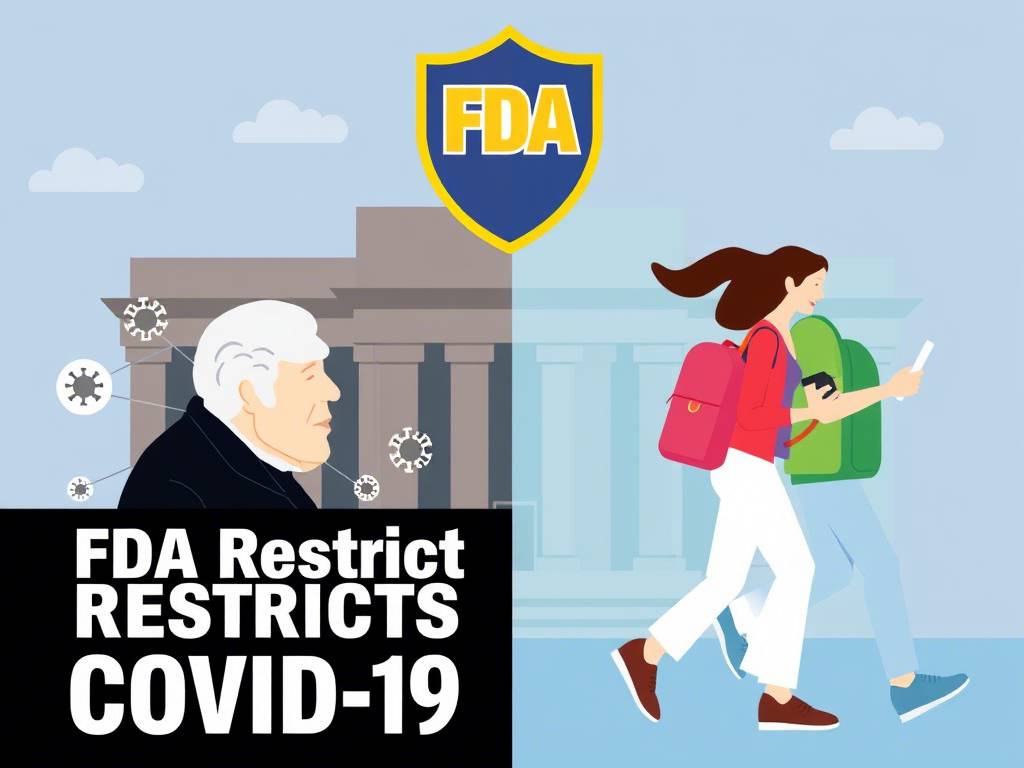
In a groundbreaking policy update, the U.S. Food and Drug Administration (FDA) has proposed restricting future COVID-19 vaccine boosters to individuals aged 65 and older or those with high-risk medical conditions. This decision marks a significant departure from previous nationwide vaccination strategies and has sparked intense debate among public health experts, pharmaceutical companies, and the general public.
What’s Changing?
Under the new framework, updated versions of the COVID-19 vaccine—designed to target emerging variants—will no longer be universally recommended. Instead, eligibility will focus on populations most vulnerable to severe outcomes:
- Adults aged 65 and older , who face higher risks of hospitalization and death.
- Individuals with underlying health conditions , such as diabetes, heart disease, or immunocompromised states.
This policy applies to future booster doses, not existing vaccines. Current vaccines remain available to all age groups under prior emergency use authorizations.
Why the Shift?
FDA officials argue that annual boosters for healthy younger adults lack sufficient evidence of cost-benefit value. Dr. Martin Makary, FDA Commissioner, and Dr. Vinay Prasad, FDA vaccine head, emphasized that the agency seeks “high-quality data” proving boosters reduce transmission or prevent severe illness in low-risk groups before approving broader distribution.

Industry Reactions: Pfizer and Moderna Respond
Pharmaceutical giants Pfizer and Moderna, whose mRNA vaccines dominate the U.S. market, expressed cautious collaboration with the FDA’s stance:
- Pfizer stated it is “evaluating the details” and remains committed to providing necessary data.
- Moderna praised the FDA’s “clear guidance” and pledged to work closely with regulators.
However, both companies face a dilemma: The FDA now requires placebo-controlled trials for future boosters—a costly and time-intensive process. Critics warn this could delay vaccine updates as rapidly mutating variants outpace trial timelines.
Expert Concerns: Balancing Risk and Access
Public health leaders and scientists have raised alarms about the policy’s potential consequences:
Dr. Richard Besser (Former CDC Director):
“By the time you finish the trial, the strain that’s circulating may be long gone. This effectively bars healthy younger people from accessing updated vaccines.”
Dr. Paul Offit (Vaccine Expert, Children’s Hospital of Philadelphia):
“The FDA has usurped the CDC’s traditional role in recommending vaccine eligibility. This isn’t their usual regulatory function.”
Experts highlight a critical scientific debate: While most Americans now have hybrid immunity (from vaccination and prior infection), the necessity of annual boosters for low-risk groups remains unproven. Conversely, restricting access could leave gaps in community immunity, endangering vulnerable populations.

Global Alignment: What Other Countries Are Doing
The FDA’s approach aligns with policies in the U.K., Canada, and Australia, which prioritize vaccines for elderly and high-risk groups. However, these nations maintain flexibility for at-risk individuals, such as healthcare workers or caregivers, to receive boosters.
The U.S. policy, however, offers no such exceptions. Dr. Prasad noted:
“There’s no high-quality evidence that your booster protects your grandma beyond her getting one herself.”
This stance has left many questioning how to safeguard vulnerable family members, especially in multi-generational households.
Implications for Insurance Coverage and CDC Guidelines
While the FDA sets authorization standards, the Centers for Disease Control and Prevention (CDC) traditionally dictates vaccine recommendations. The CDC’s Advisory Committee on Immunization Practices (ACIP) will meet later this summer to finalize guidelines for 2024–2025.
Insurance coverage will hinge on these recommendations:
- AHIP (America’s Health Insurance Plans) stated insurers will “monitor ACIP and CDC guidance” but emphasized “no changes to current coverage.”
- Out-of-pocket costs for ineligible individuals could rise if boosters aren’t covered.
The Debate Over Transmission and Immunity
A core issue fueling the FDA’s decision is the lack of conclusive data on whether boosters reduce transmission in healthy adults. While vaccines excel at preventing severe disease, their impact on mild infections and viral spread remains debated.
Dr. Offit acknowledged this complexity:
“People might reasonably choose to get vaccinated to avoid moderate infections. I hope we’re not too restrictive.”
Historical Context: From Pandemic to Endemic Management
The FDA’s shift reflects a broader transition from emergency pandemic response to managing COVID-19 as an endemic disease. With the public health emergency officially over, the focus is now on sustainable, evidence-based strategies.
Key Statistics:
- 300+ weekly deaths in the U.S. as of March 2024.
- 1,000+ weekly deaths earlier in 2024 during winter surges.
These numbers underscore the virus’s ongoing threat, even as mitigation efforts evolve.
What’s Next?
The FDA’s vaccine advisory committee will meet on [insert date] to discuss safety, efficacy, and trial requirements. Final CDC recommendations are expected later this year.
Pharmaceutical companies must now decide whether to invest in placebo trials—a costly gamble with uncertain payoffs. Meanwhile, advocates for broader access warn of “vaccine deserts” for younger populations.
Conclusion: A Delicate Balance
The FDA’s policy change underscores the challenges of balancing individual health autonomy with population-level risk management. While prioritizing vulnerable groups makes epidemiological sense, critics argue that limiting access could erode trust and leave gaps in collective immunity.
As the debate unfolds, one thing is clear: The era of universal booster campaigns is giving way to a more targeted, data-driven approach. Whether this strategy succeeds will depend on rigorous science, transparent communication, and adaptability in the face of an ever-evolving virus.

