
The Trump administration recently deported 238 MS-13 gang members to El Salvador. This move shows President Trump’s commitment to immigration policy and stopping gang violence. Officials say it’s part of their efforts to enforce laws and keep communities safe by targeting criminals.
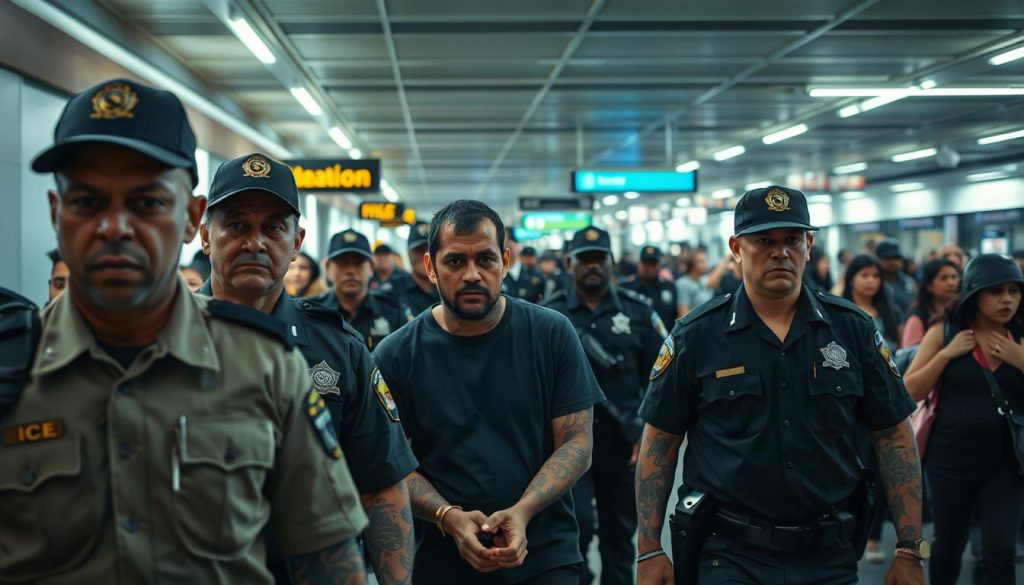
This deportation is one of the biggest in years, focusing on gang members. The Trump team is keeping its promise to remove criminals from the U.S. Those deported face charges for violence and organized crime. This shows the U.S. is serious about fighting gangs in Central America.
Key Takeaways
- 238 MS-13 members removed in a coordinated deportation operation.
- Operation emphasizes Trump’s immigration policy updates targeting criminal aliens.
- Collaboration with El Salvador authorities ensured smoother repatriation processes.
- Highlights administration claims of strengthening border security and public safety.
- Part of broader efforts to reduce gang violence through deportation updates.
Trump Deports 238 Gang Members to El Salvador in Major Immigration Operation
Recent immigration updates show a big effort to deport gang members. This operation, called Operation Matador, aimed to get rid of Salvadoran gang members linked to MS-13. Here’s a detailed look at this important gang deportation update.

Details of the Deportation Process and Timeline
Flights started in March 2023 and ended in August. The steps were:
- Finding people through US immigration laws and criminal records.
- Safe flights under homeland security measures.
- Handing over to El Salvador following agreements.
Cooperation Between US and El Salvador Authorities
A joint team made government deportation efforts smoother. Here’s what they did together:
| Aspect | US Role | El Salvador Response |
|---|---|---|
| Data Sharing | Shared criminal histories | Accepted deportees |
| Legal Framework | Applied US deportation policy | Updated protocols |
Role of ICE and Homeland Security
ICE operations focused on stopping crime under the Trump administration action. They did:
- Used special teams to find central American gang deportees.
- Worked with local police for arrests.
- Made public statements on border security.
Operation Matador shows how working together can improve US El Salvador relations and safety.
The MS-13 Threat and Trump Administration’s Crackdown Efforts
The MS-13 gang started in the 1980s in Los Angeles. It’s known for gang violence in El Salvador and criminal activities like drug trafficking and extortion. Its growth is linked to central American deportations of gang members, expanding its reach in El Salvador and more.
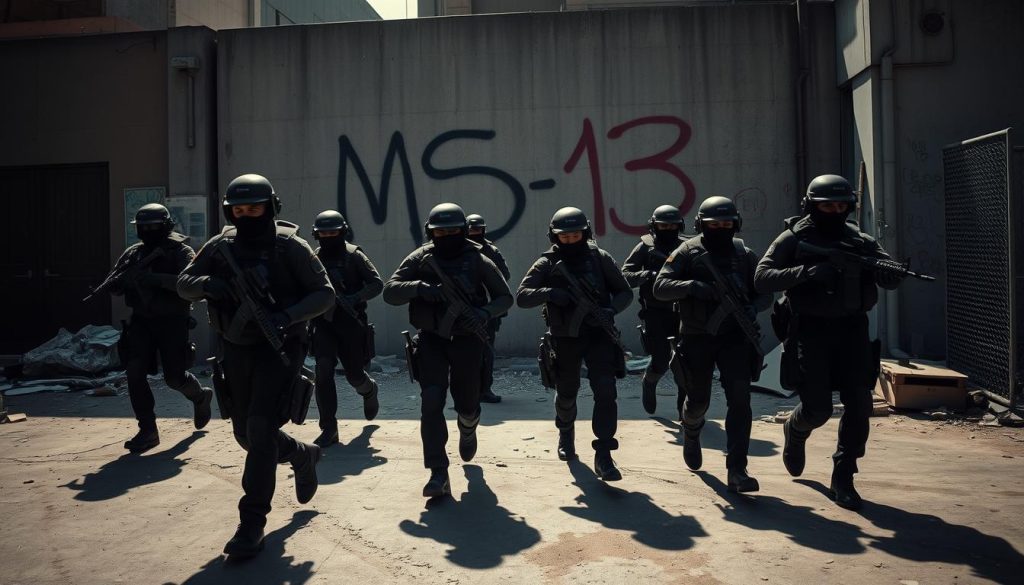
The Trump anti-gang measures aim to disrupt these networks. They do this through deportation crackdowns targeting MS-13 members. Key strategies include:
- Strengthening border security measures to block entry of suspected gang affiliates
- Expanding law enforcement actions to prosecute MS-13 gang members
- Coordinating with El Salvador’s government to address gang violence control at its source
Over 1,500 MS-13 gang members have been removed under Trump immigration policy from 2017, according to Department of Homeland Security data. These enforcement actions aim to reduce gang violence by dismantling recruitment pipelines and cutting ties between U.S. and Central American gangs. Critics say focusing on gang member removal alone can’t solve the problem of poverty. But supporters point to reduced crime in high-risk U.S. cities.
The government action on gangs is part of a broader gang violence control measures strategy. By prioritizing immigration enforcement, the administration claims to protect communities from the MS-13’s criminal activities. This approach shows how central American gang members face consequences for violating U.S. laws. El Salvador works to address its own El Salvador gangs through joint task forces.
Conclusion: Impact and Future of Immigration Enforcement Under the Trump Administration
The Trump administration’s focus on immigration has led to the deportation of 238 MS-13 members to El Salvador. Officials say this move strengthens national security by removing gang members. But, the long-term effect on MS-13 in the U.S. is a topic of debate.
El Salvador is facing challenges in managing deportees, with existing gang activity adding to the problem. The country’s law enforcement and social services are strained. This could lead to more gang activity and strain diplomatic relations with the U.S.
The administration’s deportation strategy might target other criminal groups in the future. Supporters see this as part of a broader effort to secure the border. Critics, on the other hand, want policies that address the root causes of migration and gang recruitment.
Deportation policies must find a balance between enforcement and helping vulnerable populations. Legal challenges are ongoing, with courts looking at procedures for criminal aliens. Policymakers must weigh security goals against ethical immigration practices.
FAQ
What prompted the deportation of 238 gang members to El Salvador?
The Trump administration wanted to reduce gang violence. They aimed to make public safety better. They removed MS-13 members, a gang in both the U.S. and El Salvador.
How does the deportation process work for gang members?
First, U.S. authorities identify and detain gang members. Then, they go through a legal process. This ends with them being handed over to El Salvador’s authorities.
What role does the Department of Homeland Security play in deportation operations?
The Department of Homeland Security leads the deportations. They make sure resources are used well. They work with ICE to keep the country safe.
How does the Trump administration’s immigration policy address gang violence?
The administration has a few plans. They want to secure the border better. They also target gangs and work with Central American governments.
What are the implications of returning deported gang members to El Salvador?
Bringing gang members back could make violence worse in El Salvador. It could be hard for law enforcement. It might also make the region more unstable.
How are deportations of gang members viewed politically?
Politically, these deportations show the Trump administration’s focus on national security. They appeal to those who want strict immigration laws. But, they also get criticized for their humanitarian and broader impacts.
What statistics are available regarding MS-13 and deportations?
There are many stats on MS-13 arrests, convictions, and deportations. They show how big the gang problem is. They also highlight law enforcement’s efforts in the U.S. and Central America.
What might future immigration enforcement look like under the Trump administration?
The future might see more deportations of criminal groups. The focus will likely stay on making the country safer. This will include aggressive immigration policies.

